Professional Sod Installation in Canton, Akron & Stark County, Ohio
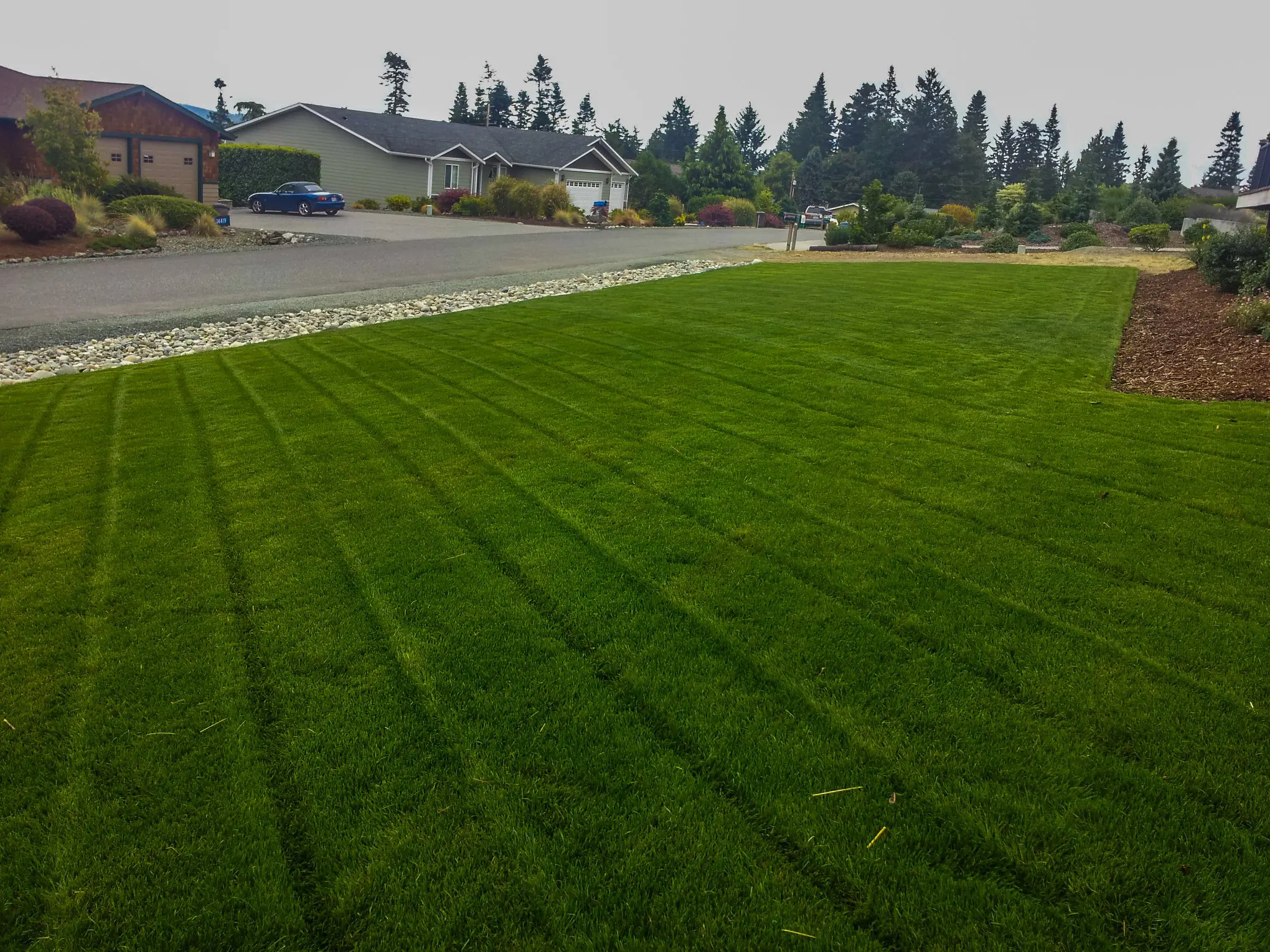
Sod is the only way to go from bare dirt to a finished lawn in a single afternoon. But here’s what most homeowners don’t realize until they’ve paid for it twice: sod installation is 80% ground preparation and 20% laying grass. The rolls are the easy part. What determines whether your new lawn is still thick and green in three years — or dead in patches by next July — is everything that happens before the first roll touches the ground. I’m Jordan Filimonuk, owner of Fili Property Maintenance, and I’ve spent over 15 years designing, building, and maintaining landscapes across Northeast Ohio — long enough to see plenty of sod jobs done right and plenty done in a hurry on unprepared clay.
With 140+ five-star Google reviews and a 4.9 rating built on doing exactly what I say I’ll do, I bring the same no-nonsense approach to sod that I bring to every patio and wall I build. I don’t subcontract your work out to whoever shows up. I personally assess every property and oversee every installation from the initial consultation to the final walkthrough. And I’ll give you a straight answer on whether sod is even the right call — I also install lawns by seed and hydroseeding, and sometimes one of those fits your yard and budget better.
Northeast Ohio is not an easy place to establish a lawn. Our heavy clay soil is unforgiving — it compacts, it holds water, it cracks in drought, and it starves grass roots of oxygen. Add Zone 6a freeze-thaw cycles that heave poorly graded ground every winter, and you get the pattern I see constantly around Canton and Akron: beautiful sod in June, dead sod in August, because somebody unrolled it straight onto compacted builder’s clay. That’s not an installation. That’s expensive green carpet laid over concrete.
Serving Canton, Akron & All of Stark County
Fili Property Maintenance is a landscaping contractor based out of Louisville, Ohio and serving Stark County including Canton, North Canton, Massillon, Alliance, and Canal Fulton, plus Summit County communities including Akron, Hudson, Stow, Fairlawn, Cuyahoga Falls, and Bath. I install sod on new-construction lots in North Canton where the builder scraped off every inch of topsoil, on established lawns in Hills and Dales and Ridgewood thinned past saving by mature tree canopy, and on Akron properties from Firestone Park to Fairlawn Heights where decades of compaction have left grass fighting for its life. Not sure you’re in range? Check the full service area page or just call.
Why Sod Installation Is 80% Ground Prep
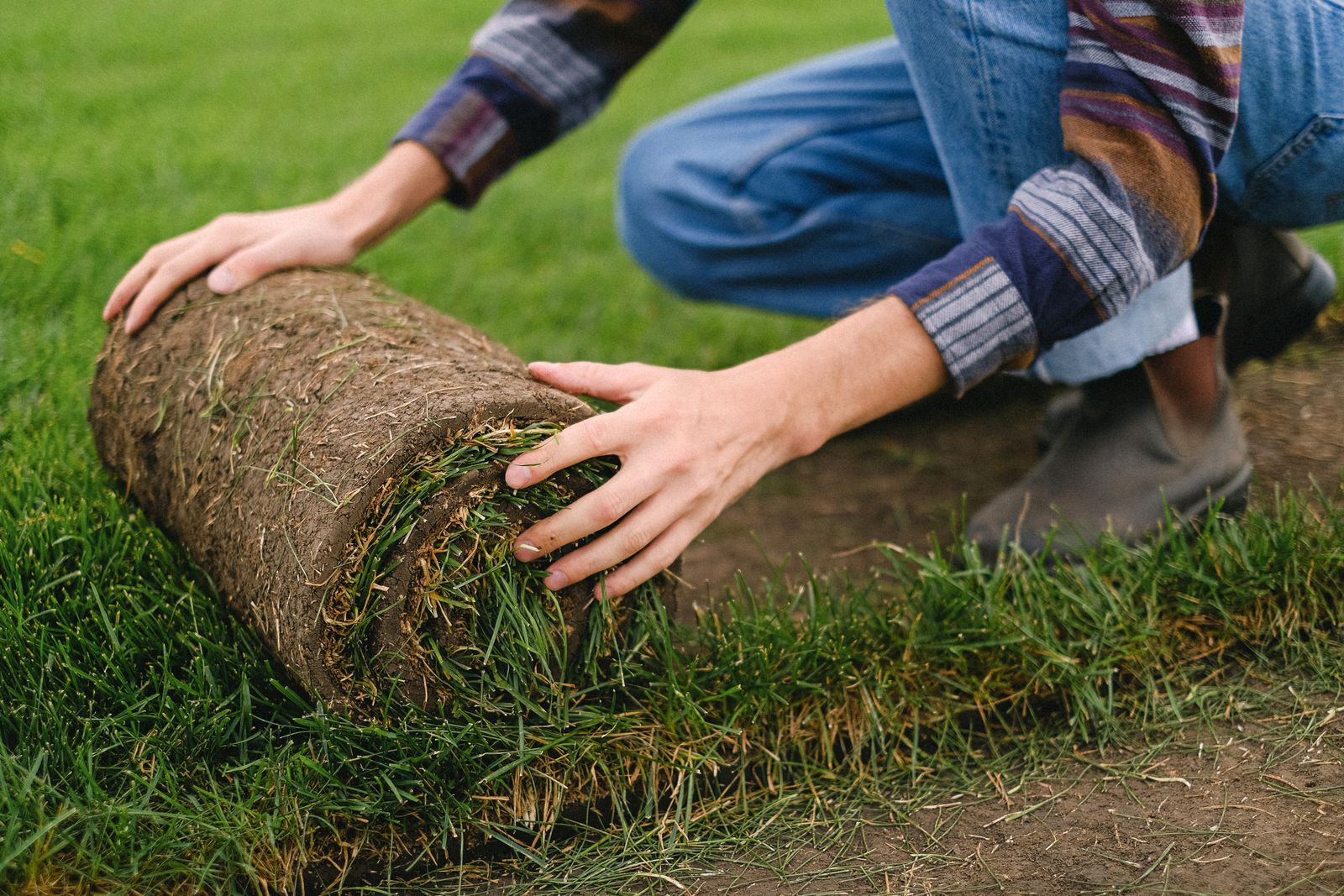
Any two guys with a truck can unroll sod. Plenty do. The difference between a $2,000 lawn that thrives and one you’re replacing in two years is what’s underneath.
Sod arrives with roughly an inch of soil and roots attached. To survive, those roots have to grow down into your ground — fast. If that ground is compacted clay, the roots hit a wall. The sod lives a few weeks on surface watering, looks great through spring, and then the first hot dry stretch in July kills it, because it never actually rooted. I’ve torn out and redone other companies’ sod jobs across Stark County to prove that point, and the failure is almost always the same: no kill-off, no grading, no soil amendment, no rolling. Just sod slapped down on whatever was there.
That’s why my installations start with the ground, not the grass. Grading solves the drainage problems that drown sod in our clay. Amendment gives roots something to grow into. Roll-down contact lets water and roots move from sod to soil. Skip any of those and you’re gambling with real money. I don’t cut corners on prep, and I’ll tell you up front exactly what your yard needs.
Sod vs. Seed vs. Hydroseeding: A Straight Answer
I offer all three ways to establish a new lawn, so I have no reason to push you toward the expensive one. Here’s the honest comparison I give at every consultation:
Sod is instant. You get a finished lawn the day we leave, usable within a few weeks, and it chokes out weeds because there’s no bare soil to colonize. It’s also the most expensive option and the least forgiving of bad prep. Sod is the right call when you need a lawn now — a new build, a house going on the market, a backyard torn up by a patio project, or a slope where seed would wash out.
Seed costs roughly one-third of what sod costs. That’s the whole argument, and it’s a good one. The trade-off is time: a seeded lawn takes a full growing season or more to look established, and you’ll fight weeds the first year. With patience and a mostly flat yard, new lawn installation by seed is the best value in the business.
Hydroseeding splits the difference — a sprayed slurry of seed, mulch, fertilizer, and tackifier that germinates faster and holds slopes better than broadcast seed, typically $0.10–$0.19 per square foot versus $1.35–$2.65 for installed sod. An acre of sod is a serious check; an acre of hydroseeding is very manageable. It still needs a season to fill in, but it gets there quicker than seed.
When I walk your property, I’ll tell you straight which of the three fits your yard, timeline, and budget. I don’t oversell. Sometimes that costs me a sod job and books a hydroseeding job instead. Fine by me — my 4.9 rating and 140+ reviews didn’t happen by accident.
Why Northeast Ohio Clay Demands Real Prep Before Sod
If you’ve ever dug a hole in a Canton or Akron backyard, you know what’s down there: dense orange-brown clay that turns to grease when wet and brick when dry. Most of our housing stock — the postwar ranches, the 90s and 2000s developments in North Canton and Jackson Township, the new builds around Louisville and Canal Fulton — sits on lots where construction equipment compacted that clay and the builder spread an inch of topsoil over it as an afterthought.
Sod can’t root into that, and water can’t drain through it, which is why so many local lawns hold puddles for days after a storm. In Zone 6a, that trapped water freezes and thaws dozens of times a winter, heaving the surface and shearing off whatever shallow roots the sod managed to put down.
So before any sod goes down, I fix the ground: positive grade away from the house so water moves instead of pooling — a light regrade on some properties, real grading and drainage work first on others — plus breaking up compaction and amending with topsoil or compost so there’s an actual root zone. Northeast Ohio clay will fight you forever if you ignore it. The trick is to work with it rather than against it — build a root zone on top and get the water moving off.
My Sod Installation Process, Step by Step
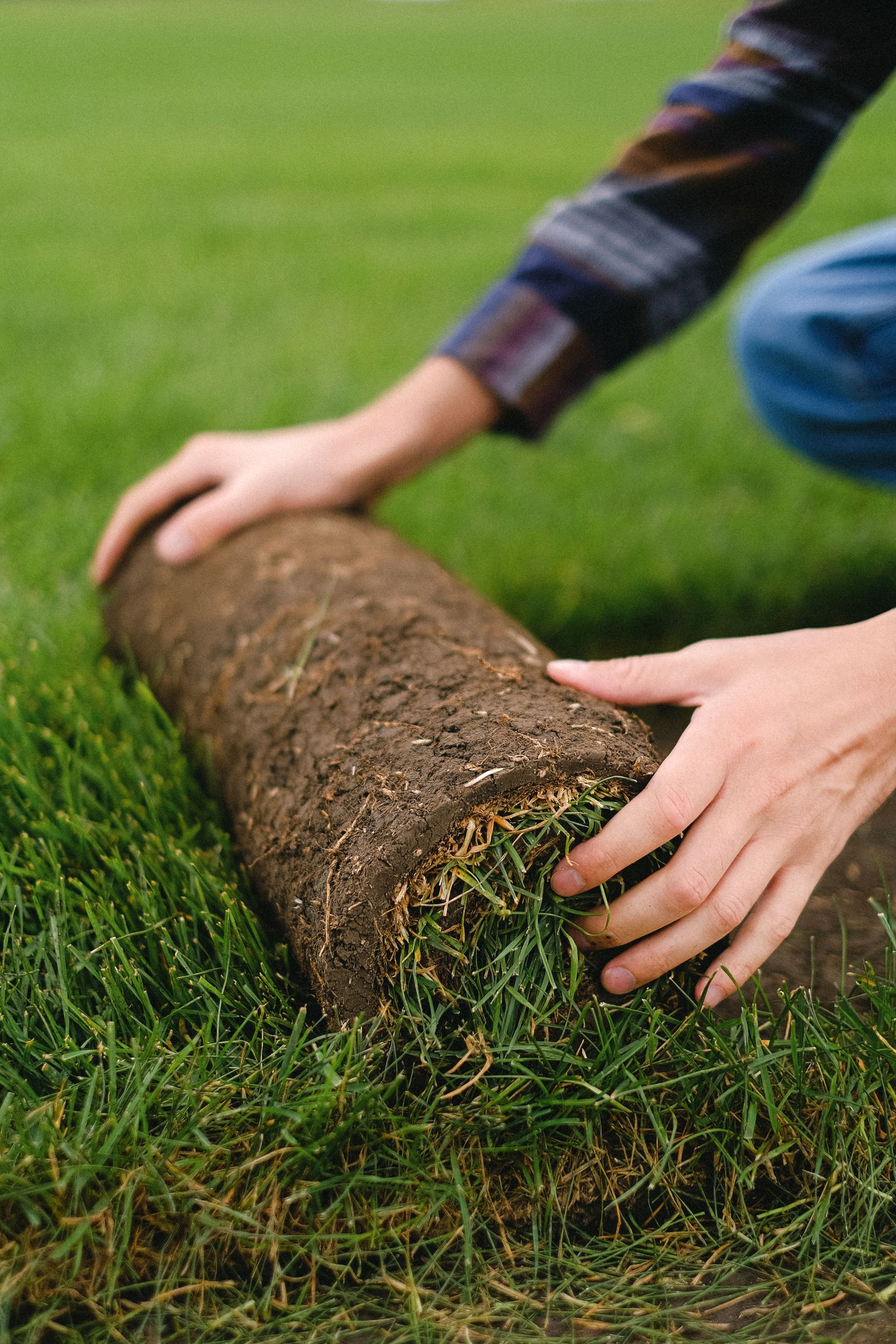
Every sod job I do follows the same process — here’s exactly what you’re paying for:
-
On-site assessment and measurement. I walk the property with you, measure the actual square footage, check grade and drainage, and probe the soil. This is where I tell you honestly whether you need sod at all.
-
Kill-off and removal of the existing lawn. We eliminate the old grass and weeds — a non-selective herbicide application 10–14 days ahead, mechanical sod-cutting and removal, or both. Laying new sod over live weeds guarantees they come up through the seams.
-
Grading. We establish a smooth, positive grade — roughly 1 inch of fall per 4 feet away from the foundation where the lot allows — and eliminate low spots that collect water. Real drainage problems get full property grading work before sod is even scheduled.
-
Soil amendment. We loosen the top 4–6 inches and work in screened topsoil or compost so roots have a real root zone, not raw clay — stripped new-construction lots can need 2–4 inches of imported topsoil. This is the step the cut-rate crews skip, and the step that decides whether your lawn is alive in three years.
-
Final grade and firm-up. We fine-rake the soil smooth, lightly firm it so finished sod sits about an inch below adjacent walks and patio edges, and apply starter fertilizer.
-
Sod delivery and same-day installation. Sod is perishable — cut fresh at the farm and on the ground within 24 hours, faster in summer heat. Rolls go down in a staggered brick pattern, seams tight, edges trimmed clean, no gaps and no overlaps.
-
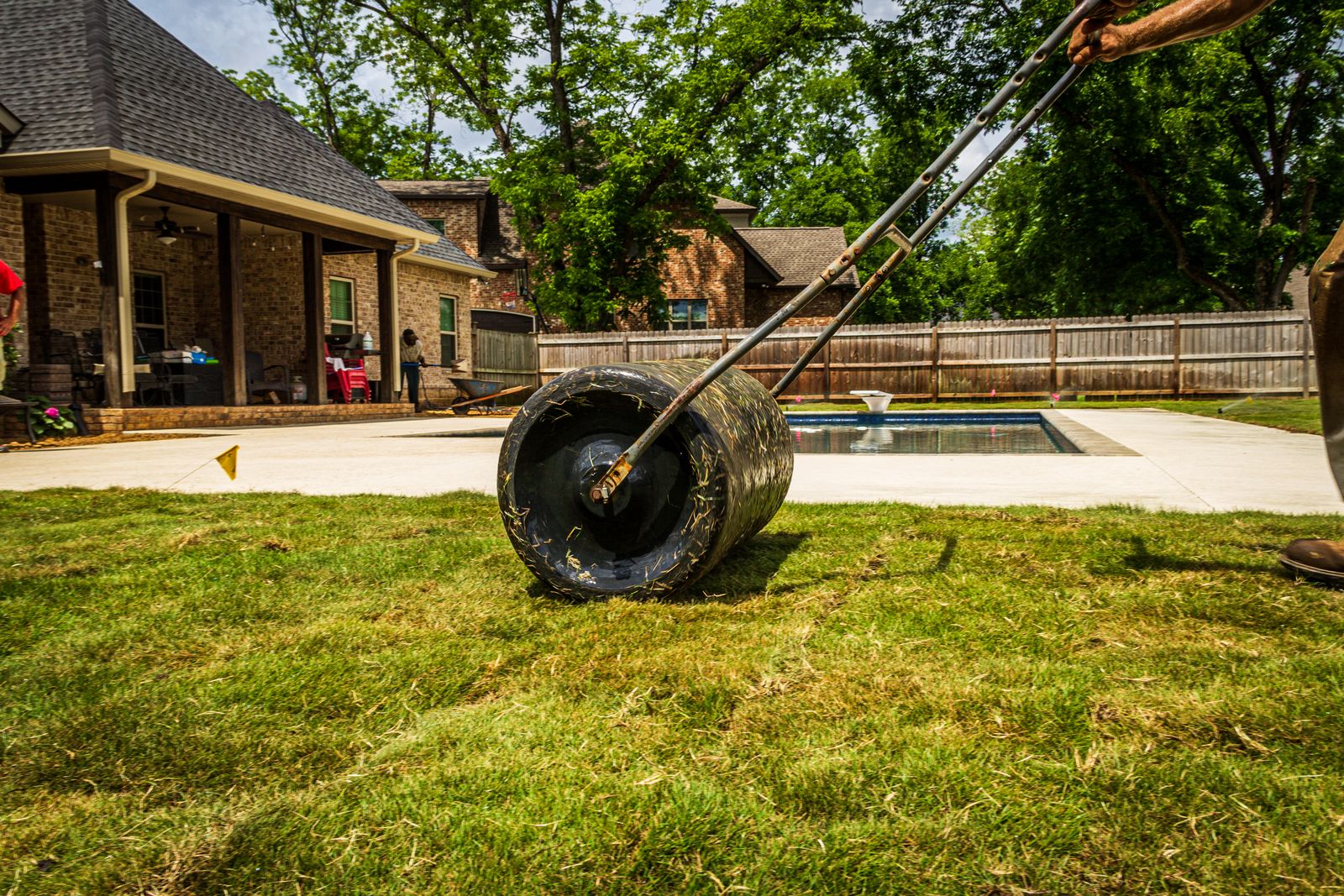
Rolling. We roll the entire lawn with a weighted roller to press sod into full contact with the soil below. No air pockets means roots and water move straight from sod to soil.
-
First watering and your care schedule. We soak the new sod through to the soil beneath before we leave, and I hand you a plain-English watering schedule. If you have an irrigation system, I’ll program the zones for establishment — and if you’ve been thinking about one, before new sod goes in is the smartest time to install it.
Which Grass Varieties Work in Zone 6a?
Northeast Ohio sits in USDA Zone 6a, cool-season grass country, and the sod I install comes from regional farms growing blends bred for our conditions:
- Kentucky bluegrass blends are the backbone of quality sod in our market — three or four elite cultivars blended together. Bluegrass spreads by rhizomes and knits into a dense, self-repairing turf with that deep blue-green color people picture when they picture a great lawn. It wants sun and water, but nothing else looks like it.
- Bluegrass/tall fescue mixes add deeper roots, better drought tolerance in our cracking summer clay, and better part-shade performance — a smart pick under the mature tree canopy in older Canton and Akron neighborhoods.
- Fine fescue components show up in shade blends for yards that only get a few hours of direct sun.
When I quote your job I’ll tell you which blend the farm is cutting and why it fits your sun, tree cover, kids and dogs, and irrigation reality. What you won’t get from me is bargain out-of-region sod that was never bred for a Zone 6a winter.
What Does Sod Installation Cost in Canton and Akron?
Most local companies won’t put a number on their website. I will — I’d rather you walk into the consultation knowing the honest range than get ambushed by a quote.
Professionally installed sod in our area runs $1.35–$2.65 per square foot, covering ground prep, the sod itself, delivery, installation, and rolling. Per Angi’s most recent Ohio data, a typical residential sod project lands around $1,742, with most jobs falling between $864 and $2,620. Where you land in the per-foot range is mostly prep: a level lot needing light grading sits at the low end; a stripped new-construction lot needing imported topsoil or drainage correction sits at the high end.
| Project size | Typical scope | Price range |
|---|---|---|
| Small — up to 1,000 sq ft | Front yard, parkway strips, patio-project repair | $950–$2,200 |
| Medium — 1,000–3,000 sq ft | Full front yard or average backyard | $1,700–$6,500 |
| Large — 3,000–8,000+ sq ft | Full property, new construction | $4,000–$15,000+ |
For your own math: sod is sold by the pallet, each covering roughly 450 square feet, and pallets run $150–$550 depending on variety, with around $350 typical for quality Kentucky bluegrass blend delivered in our area. And remember: a 1,000 sq ft new lawn runs $950–$2,200 in sod versus roughly a third of that in seed. That’s the real trade — money against time.
If you need a firm price, please request a consultation so we can view your potential project, listen to your ideas, and determine the actual scope of work required. Prep is where the real cost lives, and every yard’s is different. Estimates are always free.
When Is the Best Time to Lay Sod in Ohio?
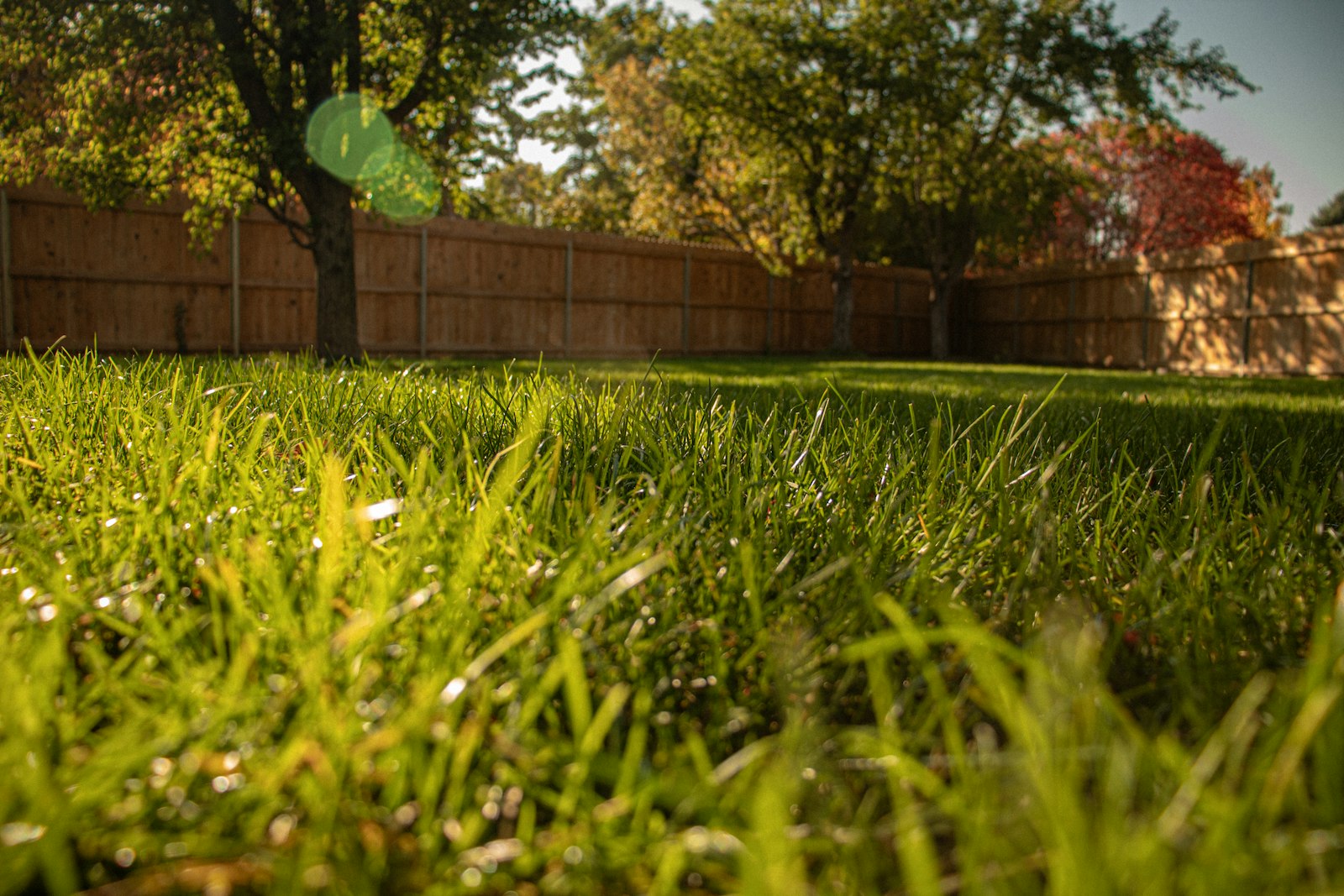
Early fall is the best window — roughly late August through mid-October — with spring (April through early June) a close second. Fall gives cool-season sod warm soil, cool air, and reliable rain: roots knit fast, and the lawn gets fall plus the following spring to establish before its first hot summer. Spring installs work well too; they just need more diligent watering that first summer.
Summer installation is possible — I do it when a project demands it — but July and August sod needs serious daily water and less margin for error. What I won’t do is lay sod on frozen ground; late-November installs are a gamble I’ll talk you out of. The nice thing about sod: seed realistically gets two short windows a year, while sod can go down almost any time the ground isn’t frozen.
Caring for Your New Sod
Your part starts when my crew pulls out of the driveway, and the first three weeks matter most:
- Watering: Daily — twice daily in warm or windy weather — for the first two weeks, deep enough to soak through the sod into the soil beneath (lift a corner to check). Taper to every other day in weeks three and four, then settle into deep, infrequent watering like an established lawn.
- Staying off it: Keep foot traffic and dogs off for the first two weeks. When a tug on a corner meets resistance, roots have knitted and normal light use is fine.
- First mow: Usually 2–3 weeks in, once rooted and about 3.5–4 inches tall. Mow high with sharp blades on a dry lawn, never removing more than a third of the blade.
- First season feeding: Starter fertilizer goes down at installation; a proper fertilization program in the first full season builds the roots that carry the lawn through Ohio summers. Ongoing lawn care is the difference between sod that looks good for one season and sod that looks good for twenty — I run full programs for Canton-area and Akron-area properties if you’d rather hand it off.
Sod Installation FAQ
How much does sod installation cost in the Canton and Akron area? Professionally installed, expect $1.35–$2.65 per square foot including prep, sod, delivery, and installation. A typical project runs around $1,742, most falling between $864 and $2,620; a 1,000 sq ft lawn generally lands between $950 and $2,200. The biggest variable is how much prep your soil and grade need, which is why I quote every job in person, free.
Is sod or seed better for my lawn? Neither is “better” — they solve different problems. Sod costs roughly three times what seed costs but gives you a finished lawn immediately and holds slopes that seed washes off of. Seed is the value play if you can wait a full season. Hydroseeding lands in between. I install all three, so I’ll tell you straight which one actually fits — not which one pays me most.
What’s the best month to lay sod in Ohio? September is about perfect: warm soil, cooling air, regular rain. The broader windows are late August through mid-October and April through early June. Summer works with committed daily watering. I don’t lay sod on frozen ground.
How long before I can walk on new sod? Stay off it for about two weeks. When a corner resists a firm tug, the roots have knitted and light normal use is fine. First mow usually comes at the 2–3 week mark; hold off on dogs, playsets, and parties until after that.
Why did my last sod job die? In almost every failed sod lawn I’ve been called to replace around Stark County, the sod was unrolled onto compacted clay with no kill-off, no grading, no amendment, and no rolling. The roots had nowhere to go, so the lawn lived on sprinkler water until the first hot dry week killed it. Sod installation is 80% ground preparation — pay for the prep or you’ll pay for the sod twice.
What kind of sod do you install? Cool-season blends grown regionally for Zone 6a — primarily elite Kentucky bluegrass blends, with bluegrass/tall fescue mixes where shade or drought tolerance calls for them. I’ll match the blend to your sun, soil, and use at the consultation.
Ready for an Instant Lawn Done Right?
Transform your Canton or Akron property with a sod installation that’s built to last — real ground prep, farm-fresh Zone 6a sod, and a lawn you can be proud of the same day it goes in. A thick, healthy lawn is the fastest curb-appeal and property-value upgrade there is, and done right, it only gets better with age.
Call (330) 904-4196 now for your free Canton or Akron sod installation estimate.
Or fill out our online contact form and I’ll respond the same day (usually within hours).
Fili Property Maintenance Phone: (330) 904-4196 · info@filipropmaint.com 5928 Mann St NE, Louisville, OH 44641