How Much Does Hydroseeding Cost in Ohio?
Hydroseeding in Ohio costs $0.10 to $0.19 per square foot installed. For a quarter-acre lawn — about 10,890 square feet, which is a typical new-build lot in Stark County — that works out to $1,089 to $2,069. A full acre runs $4,356 to $8,276. That’s the straight answer, and I’ll break down every number behind it below.
I’m Jordan Filimonuk, owner of Fili Property Maintenance, and I’ve spent over 15 years designing, building, and maintaining landscapes across Northeast Ohio. I’ve hydroseeded new construction lots in Louisville, regraded and reseeded torn-up backyards in Canton, and rescued more than a few lawns where a builder threw down cheap contractor seed on compacted clay and called it done. My 4.9 Google rating and 140+ reviews didn’t happen by accident — I give people a straight answer on what it takes and what it costs, and then I do exactly what I said I’d do.
Here’s why the local answer matters: most of the hydroseeding prices you’ll find online are national averages written by people who have never put a shovel into Northeast Ohio clay. Around here, the spray is the easy part. It’s the grading, the soil prep, and the seed blend for our Zone 6a freeze-thaw climate that decide whether you get a lawn or a patchy mess you’re redoing next spring. That’s what actually moves the price — and it’s what I’ll walk you through.
What Hydroseeding Actually Is (and Why It’s Priced by the Square Foot)
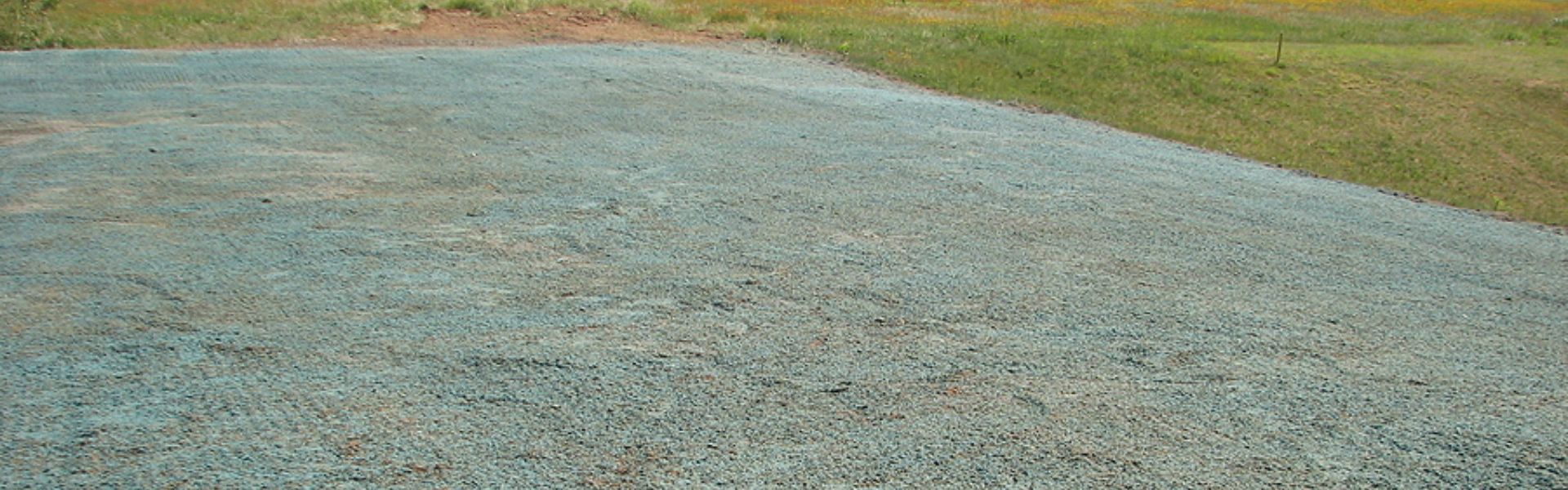
Hydroseeding is spraying your lawn on instead of rolling it out or scattering it by hand. We mix grass seed, wood-fiber or paper mulch, starter fertilizer, and a tackifier — a binding agent that glues the whole mix to the soil — into a slurry, then spray it across prepped ground under pressure. The green color you see on a fresh hydroseed job is dye in the mulch, so we can see exactly what’s covered.
That slurry is why hydroseeding beats broadcast seeding so badly on our soil. The mulch layer holds moisture against the seed, the tackifier keeps it from washing downhill in an Ohio spring thunderstorm, and the fertilizer feeds germination from day one. On the clay-heavy ground we have across Stark and Summit County — ground that compacts, holds water, and crusts over in a dry week — bare seed on the surface mostly feeds the birds. Hydroseed sticks and grows.
Because the material is sprayed at a metered rate, pricing is per square foot. More lawn, more slurry, more machine time. Simple.
Hydroseeding Cost by Lawn Size
Here’s the per-square-foot math applied to common Ohio lot sizes at the $0.10–$0.19/sq ft installed range:
| Lawn size | Square feet | Hydroseeding cost (installed) |
|---|---|---|
| Small yard / repair area | 1,000 sq ft | $100–$190 in material — but see minimums below |
| Typical suburban backyard | 5,000 sq ft | $500–$950 |
| 1/4 acre | 10,890 sq ft | $1,089–$2,069 |
| 1/2 acre | 21,780 sq ft | $2,178–$4,138 |
| Full acre | 43,560 sq ft | $4,356–$8,276 |
One honest note on small jobs: nobody mobilizes a hydroseeding rig for $150. Setup, mixing, and cleanup cost the same whether I spray 800 square feet or 8,000, so small jobs carry a minimum. Here’s how my own pricing tiers shake out:
- Small projects — $500 to $1,500. Up to about 1,000 square feet. Repair areas, side yards, spots torn up by utility work or a new patio install.
- Medium projects — $1,500 to $4,000. Roughly 5,000 to 10,000 square feet. Full backyard renovations and typical new-construction lots.
- Large projects — $4,000 to $10,000+. Half-acre-plus properties, full-acre new builds, and jobs that need serious grading before we ever fire up the sprayer.
If you need a firm price, request a consultation so I can walk the property, listen to what you want, and scope the actual work. I don’t quote lawns off satellite photos.
What Moves the Price Up or Down
Two quotes for the “same size” lawn can be $1,500 apart. Here’s why:
Lot size. The biggest factor, and the one that works in your favor — the per-square-foot rate drops as the job gets bigger, because setup costs get spread across more lawn. A full acre almost never prices at the same rate as a 5,000-square-foot backyard.
Soil prep on clay. This is the one national cost guides skip, and it’s the one that matters most here. Northeast Ohio’s heavy clay soil is unforgiving. It compacts, it holds water, it cracks in drought — and on a new-construction lot it’s usually been driven over by excavators for six months. Spraying seed onto compacted clay is a waste of your money. Real prep means loosening the top few inches, correcting grade so water moves away from your foundation, sometimes amending with topsoil. Prep can add $500 to several thousand dollars, and it’s the best money on the whole job. If a lot needs significant regrading, that’s a property grading project first and a hydroseeding project second.
Slope. Steep banks and hillsides take more tackifier and heavier mulch rates so the slurry doesn’t wash out in the first storm. Hydroseeding is actually the best seeding method for slopes — it’s what highway departments use on freeway embankments — but expect the upper end of the range.
Seed blend. We’re in USDA Zone 6a. The blends that thrive here are cool-season mixes — Kentucky bluegrass, turf-type tall fescue, perennial rye — matched to your sun, shade, and drainage. Premium blends cost more per pound than the contractor mix a builder uses, and the difference shows every summer for the next twenty years. I don’t cut corners on seed.
Access. A wide-open new build I can pull the rig right up to prices better than a fenced backyard where we’re dragging hose 200 feet around the house.
Hydroseeding vs. Sod vs. Broadcast Seeding: The Real Numbers
This is the comparison everybody actually wants, so here it is with real installed prices:
| Method | Installed cost per sq ft | 1/4-acre lawn (10,890 sq ft) | Time to usable lawn | How it handles Ohio clay |
|---|---|---|---|---|
| Broadcast seeding | $0.04–$0.10 | $400–$1,100 | 2–3 months, often patchy | Worst — seed sits on the crust, washes, feeds birds |
| Hydroseeding | $0.10–$0.19 | $1,089–$2,069 | 6–10 weeks | Best value — mulch and tackifier hold seed to clay |
| Sod | $1.35–$2.65 | $14,700–$28,900 | Instant look, 2–3 weeks to root | Great result, but needs the same soil prep |
Look at that middle column again. Sod runs roughly ten times the price of hydroseeding for the same square footage. On a quarter acre, that’s the difference between a $1,500 project and a $20,000 one.
That doesn’t make sod wrong — it makes it a different tool. Sod is instant. If you’re selling the house next month, hosting a graduation party in June, or sodding a small high-visibility front yard, sod earns its price, and I install plenty of it (sod installation is its own service with its own numbers). But for large areas, new construction lots, and anyone who can wait one growing season, hydroseeding delivers 90% of the result for 10% of the cost.
And broadcast seeding? It’s the cheapest line on the table for a reason. On loose, well-prepped loam it works fine. On our clay, germination rates are the worst of the three — the seed has no mulch holding moisture, nothing binding it through a downpour, and no starter fertilizer at the root. I use broadcast seeding for overseeding established lawns as part of a lawn care program, not for growing a lawn from bare dirt.
For a full breakdown of every method side by side, my new lawn installation page covers all three.
The Part Nobody Talks About: Prep Beats Spray
I’ll say this bluntly, because it’s where homeowners get burned. The hydroseeding spray is maybe a third of what you’re paying for. The rest is what happens before the rig ever starts.
Any outfit with a tank and a pump can spray green slurry on your lot. I’ve been called to fix plenty of those jobs — lawns that germinated beautifully in week three and died by August because the roots hit compacted clay two inches down and stopped. Grass roots need loosened soil to get deep enough to survive an Ohio July. They need grade that sheds water instead of ponding it. They need the freeze-thaw cycles we get from November through April working for the lawn, not heaving it.
So when you compare quotes, don’t compare the bottom line. Compare what’s underneath it. A $1,200 quote that’s spray-only and a $2,200 quote that includes tilling, grading, and topsoil correction are not the same product. One of them is a lawn. The other is a do-over.
When to Hydroseed in Northeast Ohio
Two windows, and I hold to them:
Late April through early June. Soil temperatures are up, spring rain does half your watering for you, and the lawn has a full season to establish before winter. The catch is summer — a lawn seeded in late May needs faithful watering through July heat.
Mid-August through late September — my favorite. Early fall is the best seeding window in Zone 6a, period. Warm soil, cooler air, fewer weeds germinating against your grass, and the lawn gets fall plus the following spring to root before it ever faces a summer.
What I won’t do is spray in July heat or into late October. Seed sprayed too late germinates weak, winter heaves it out of the clay, and you’ve paid for a partial redo. If you call me in mid-October, I’ll tell you to wait for spring — that’s the no-nonsense answer, even when it costs me a job this season.
What Your New Lawn Actually Looks Like, Week by Week
Nobody sprays a lawn Saturday and mows it Memorial Day weekend. Here’s the honest timeline:
- Days 1–7: Green-dyed mulch, no grass. Water lightly 2–3 times a day. Stay off it.
- Days 7–14: First germination — a green fuzz through the mulch. Rye comes first; bluegrass takes its time.
- Weeks 3–4: Recognizable grass, 2–3 inches, still thin in spots. That’s normal, not a failure.
- Weeks 5–6: First mow, once it hits about 3 inches. Sharp blade, high setting, dry ground.
- Weeks 8–10: Looks like a lawn. Thickening with every mow.
- One full year: Fully mature and ready for the same treatment as any established lawn — which is when a lawn fertilizing program takes it the rest of the way.
What’s in a Fili Hydroseeding Quote
When I quote a hydroseeding job, the number on the page covers the whole job, not a teaser rate:
- Site walk and assessment — I look at your soil, grade, drainage, sun exposure, and access myself. I don’t subcontract your work out to whoever shows up.
- Soil prep — tilling or loosening compacted areas, rough and finish grading, topsoil correction where the clay needs it. Itemized, so you see what you’re paying for.
- Premium Zone 6a seed blend — matched to your property, named in the quote.
- The application — seed, wood-fiber mulch, starter fertilizer, and tackifier at proper rates. No thin passes to stretch material.
- Watering and first-mow instructions — in writing, because the first three weeks are on you and I want you set up to win.
Everything’s on the hydroseeding service page, and the estimate is free.
Hydroseeding Cost FAQ
How long until it actually looks like a lawn?
Green fuzz in 7–14 days, first mow around weeks 5–6, and a lawn you’d be proud of at 8–10 weeks in good conditions. Full maturity takes a season. Anyone promising a perfect lawn in three weeks is overselling — that’s sod’s job, at sod’s price.
What’s the watering schedule, honestly?
Weeks 1–3: keep the top layer consistently damp — light watering 2–3 times a day, 10–15 minutes a zone. Once it germinates, shift to fewer, deeper waterings to drive roots down into the clay. This is the single biggest factor you control, and it’s where most failed hydroseed jobs actually fail.
Is hydroseeding worth it on a small yard?
Under about 1,000 square feet, the mobilization minimum ($500–$1,500) means the per-foot math gets worse, and sometimes broadcast seeding with erosion mats or a small sod job makes more sense. I’ll tell you which — I don’t oversell. Bundling a small hydroseed area into a bigger project like grading or a patio install is where small areas price best.
Hydroseeding or sod — which should I pick?
Budget and patience. Sod at $1.35–$2.65/sq ft is instant and costs about 10x more; hydroseeding at $0.10–$0.19/sq ft needs a season. Large areas and new builds: hydroseed. Small, high-visibility, need-it-now areas: sod. A year after install, done right, you can’t tell which was which.
Can you hydroseed over my existing dead lawn?
Not straight over it. Dead thatch keeps slurry from contacting soil. We strip or till the dead material, fix what killed the lawn in the first place — usually compaction or drainage on our clay — then spray. Skipping that step is how you buy the same lawn twice.
Does hydroseeding work on slopes?
It’s the best option there is for slopes — the tackifier bonds the seed and mulch to the bank so it doesn’t wash. Steep grades price toward the top of the range because of heavier mulch and tackifier rates, but sod on a steep slope is harder to install and broadcast seed simply washes away.
Get a Straight Number for Your Property
Transform that bare dirt or struggling lawn into thick, established turf that holds up to Ohio summers and adds real curb appeal and property value — without paying sod prices to do it. Whether it’s a quarter-acre new build in Louisville or a torn-up backyard in Canton, I’ll walk the property, tell you exactly what the soil needs, and give you one honest number.
Call (330) 904-4196 now for your free hydroseeding estimate.
Or fill out our online contact form and I’ll respond the same day (usually within hours).
Fili Property Maintenance · (330) 904-4196 · info@filipropmaint.com · 5928 Mann St NE, Louisville, OH 44641
Get Your Free Quote
Fili Property Maintenance serves Canton, North Canton, Louisville and the surrounding Stark and Summit County communities. Call or text (330) 904-4196, or send the form below and we will get right back to you.