
Paver Walkway & Driveway Installation in Canton, Akron & Northeast Ohio
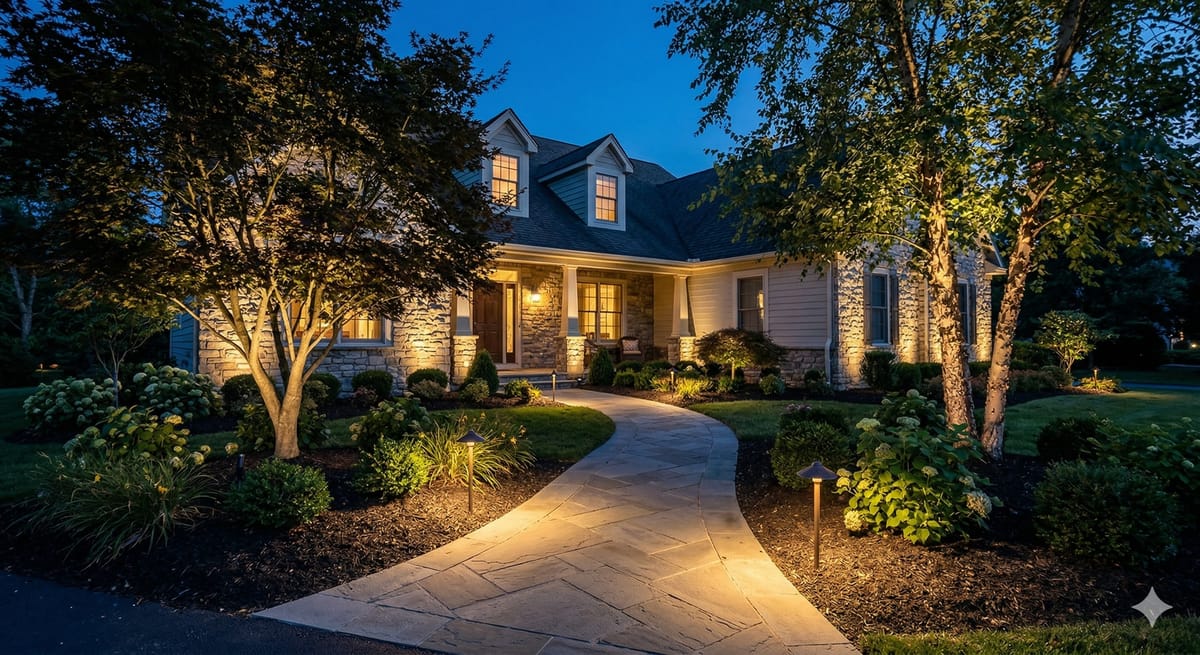
A paver walkway or driveway is a hard surface built from individual concrete, brick, or natural stone units set over a deep compacted aggregate base — not a poured slab. Each paver is a separate piece, locked to its neighbors by jointing sand and held at the perimeter by an edge restraint. That construction is the whole point: when the ground under a properly built paver surface moves — and in Northeast Ohio, the ground always moves — the surface flexes with it instead of cracking. I’m Jordan Filimonuk, owner of Fili Property Maintenance, and I’ve spent over 15 years designing, building, and maintaining landscapes across Northeast Ohio, including the walkways and driveways that take more abuse than any other surface on your property.
I personally assess every property, create every design plan, and oversee every installation from the initial consultation to the final walkthrough. I don’t subcontract your work out to whoever shows up. With 140+ five-star Google reviews, a 4.9 rating, and a reputation built on doing exactly what I say I’ll do, I’ll give you a straight answer on what your walkway or driveway will take to build and what it will cost — the same way I do for every paver patio and retaining wall I build. I’ve torn out enough heaved front walks and crumbling driveway aprons around Stark County to know exactly why they failed, and it’s almost never the pavers. It’s what’s underneath them.
Fili Property Maintenance is a landscaping contractor based out of Louisville, Ohio and serving Stark County including Canton, North Canton, Massillon, Alliance, and Canal Fulton, along with Summit County communities like Akron, Hudson, Stow, Fairlawn, Cuyahoga Falls, and Bath. Your walkway is the first thing a visitor touches on your property and your driveway is the biggest hardscape surface you own — around here, both have to be engineered for clay soil and forty-plus freeze-thaw cycles a winter, or they won’t make it five years. You can see everywhere I work on my service area page.
Why Do Walkways and Driveways Fail in Northeast Ohio?
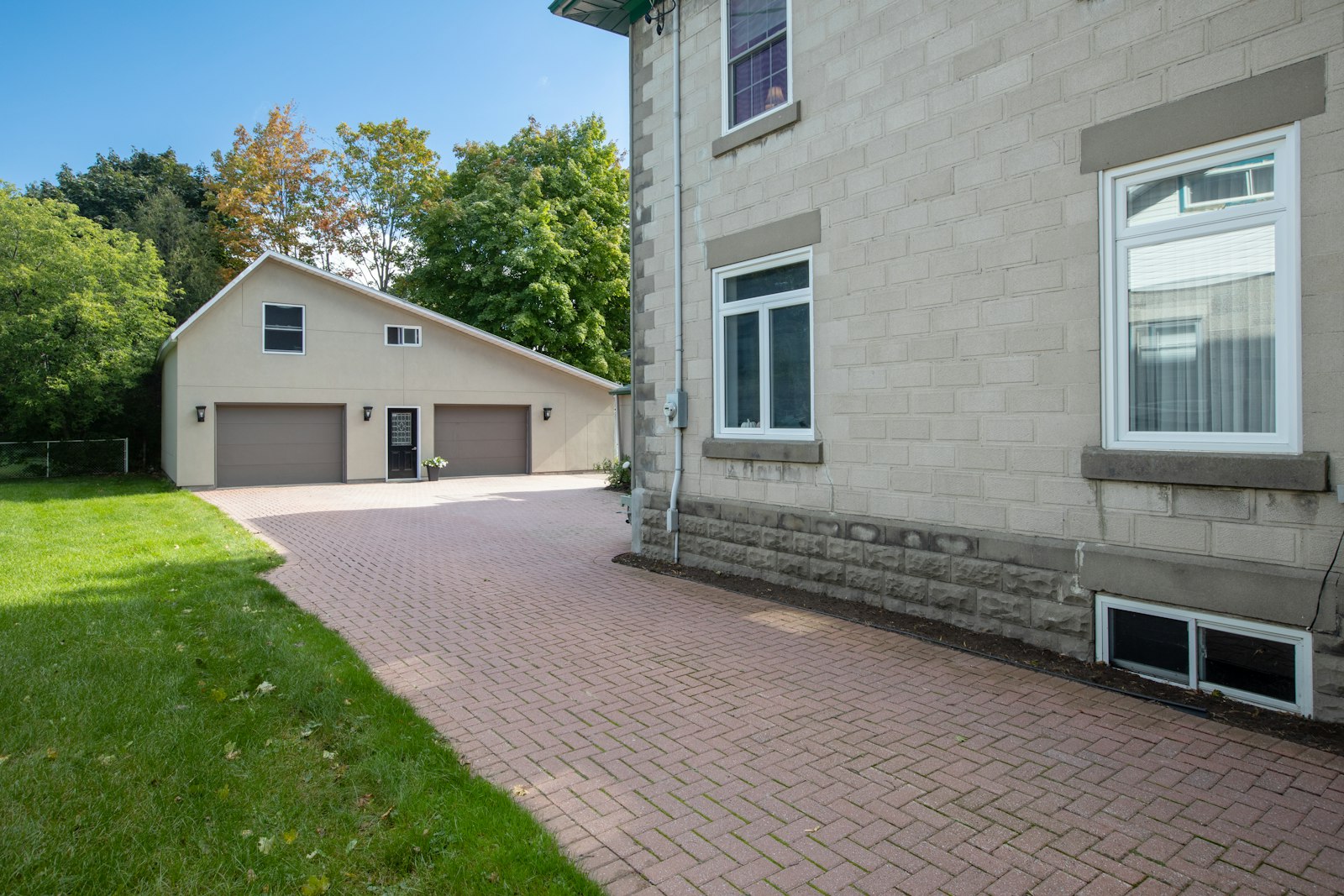
Northeast Ohio’s heavy clay soil is unforgiving. It compacts, it holds water, it heaves when that water freezes, and it destroys cheap hardscaping. We sit in USDA Zone 6a, where a typical winter swings above and below freezing dozens of times. Every one of those swings, water trapped in the soil expands about nine percent as it turns to ice, pushes the ground up, then lets it settle back down as it thaws. Any surface sitting on top of that soil rides the same elevator.
A poured concrete slab is one rigid piece. It can’t flex, so it cracks — first a hairline at a control joint, then a full break, then a corner of your front walk tilting up an inch and catching every snow shovel and every toe. Once water gets into that crack, freeze-thaw wedges it wider every winter. There’s no honest repair for a badly cracked slab; you cut it out and re-pour it.
A paver system fails differently — or, built right, doesn’t fail at all. Because the surface is hundreds of individual units over a properly drained aggregate base, the frost movement is absorbed and distributed. The pavers flex as a system; the concrete cracks as a slab. And when a paver surface does develop a low spot after a decade — usually from a downspout dumping water where it shouldn’t — you lift that section, re-screed the bedding, and set the same pavers back down. Try that with a slab.
The catch is that pavers only behave this way over the right base. A walkway laid on two inches of limestone screenings over raw clay will shift and sink within two winters, and I’ve rebuilt plenty of other companies’ walkways around Canton and North Canton to prove that point. Water management matters just as much as compaction here — if your yard already ponds or your downspouts discharge next to the house, we solve that first with proper drainage solutions, because no base survives sitting in saturated clay.
How Do I Build a Walkway or Driveway That Survives Freeze-Thaw?
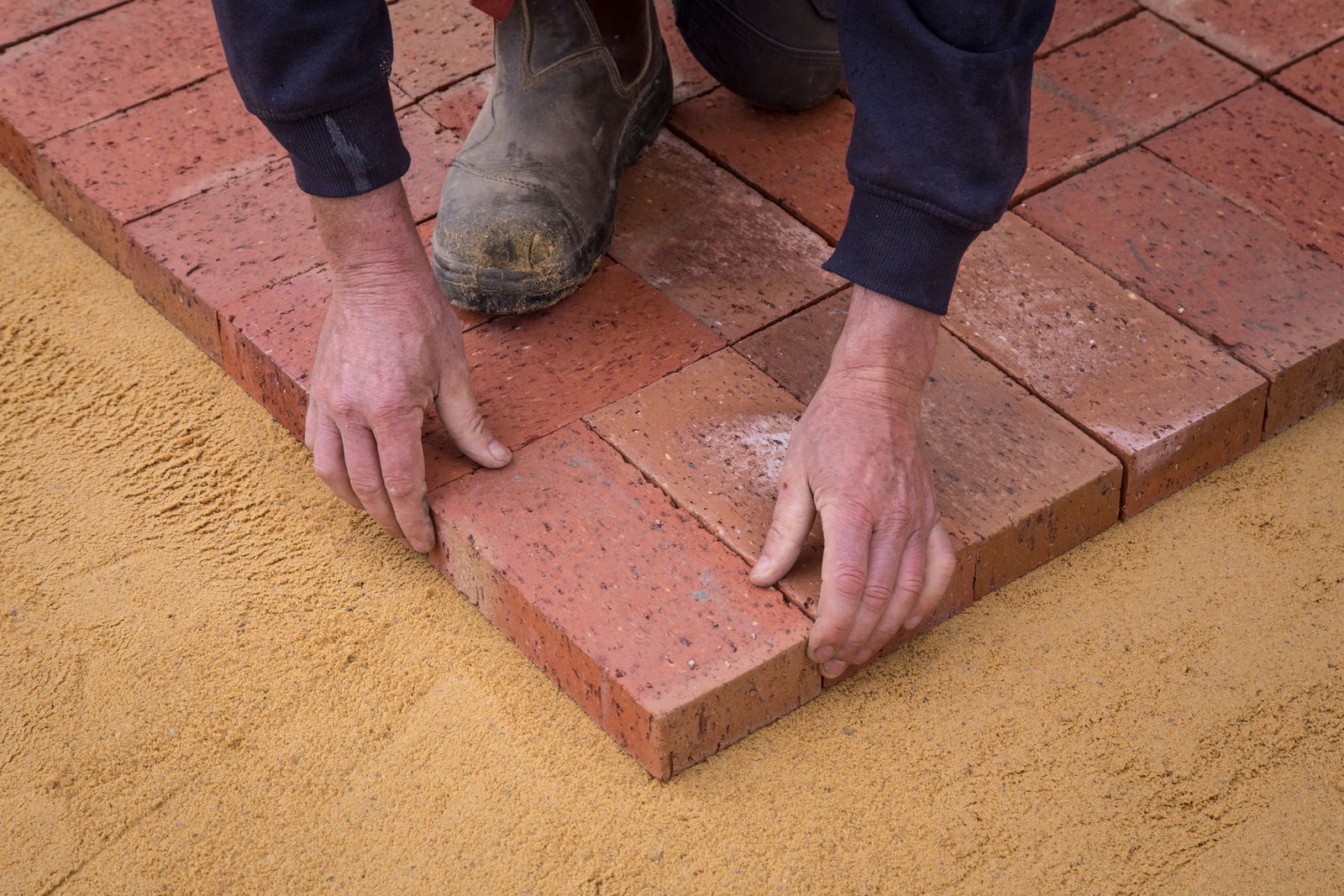
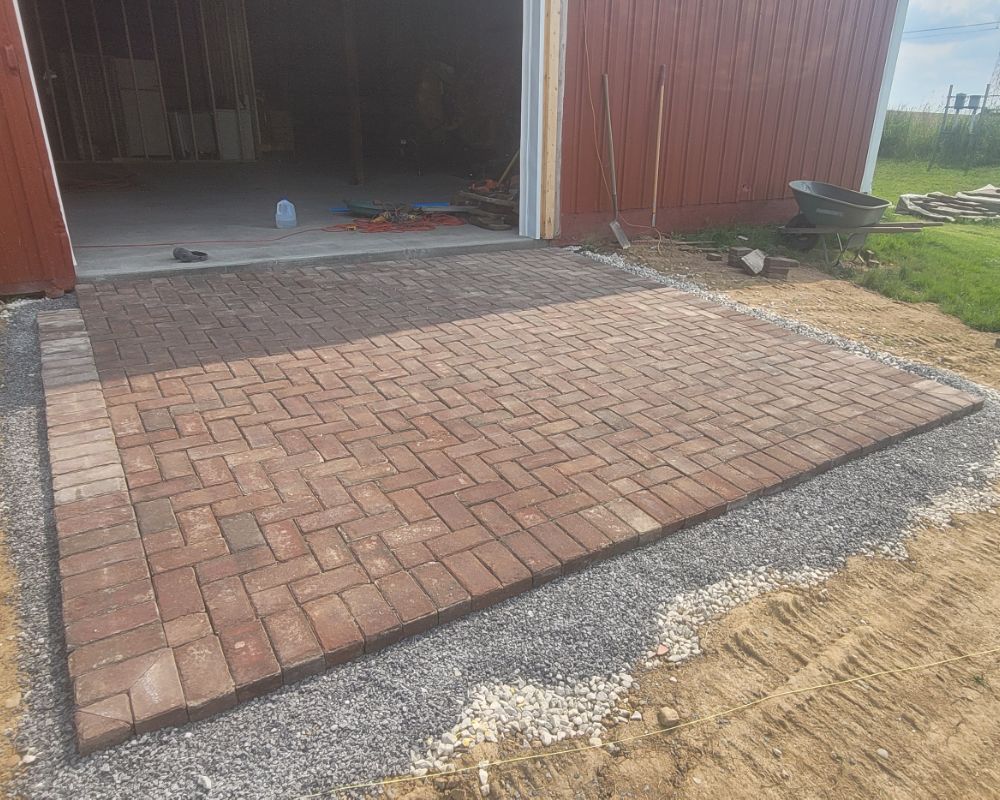
The process below is the same one I use on every hardscape I build, scaled to the load the surface has to carry. A walkway carries people; a driveway carries a 5,000-pound SUV making the same turn in the same spot every day. The difference is depth, not shortcuts.
-
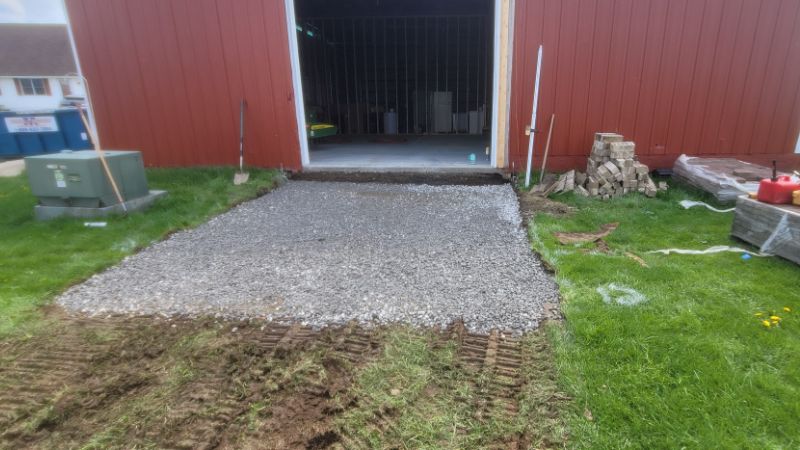
Layout and excavation. I mark the final layout on the ground so you can walk it before we dig — width, curves, where it meets the porch steps and the driveway. Then we excavate to full depth: typically 7 to 10 inches below finished grade for a walkway, 12 to 14 inches for a driveway. On the clay we have in most of Stark and Summit County, I excavate down to stable subsoil and slope the subgrade so water has somewhere to go.
-
Geotextile fabric over the clay. A woven geotextile separates the clay subgrade from the aggregate base. Skip it and the clay slowly pumps up into the stone over a few wet seasons, the base loses its structure, and the surface starts rolling. It’s a cheap layer that most low-bid installers leave out because you’ll never see it. You’ll feel it in year six.
-
Compacted open graded base. All of my walkways get a minimum 5 inch compacted open graded base; driveways get 10 to 12 inches, compacted in lifts of no more than 3 to 4 inches with a plate compactor. Open graded (clean, angular stone with no fines) is the key spec for our climate — water drains straight through it instead of being held against the pavers, so there’s nothing under the surface to freeze and heave. This base is the single biggest difference between a walkway that lasts thirty years and one that lasts three, and it’s the same standard I hold on every paver patio I build.
-
Bedding layer, screeded flat. A consistent 1-inch bedding layer of clean angular chip stone, screeded to final grade with the surface pitched about a quarter inch per foot away from your foundation. That pitch is deliberate — your walkway should be shedding water toward the lawn, never toward the house.
-
Paver installation and cutting. Pavers go down in the agreed pattern, with borders and inlays cut on site. Field cuts are where sloppy crews show themselves; tight, clean cuts around your porch piers, light posts, and step noses are where good ones do.
-
Edge restraint. Every edge that isn’t locked against a structure gets a spiked edge restraint. This is what stops the whole surface from creeping outward under load and letting the joints open up. On driveways, where turning tires push pavers sideways every single day, the edge restraint is not optional and I anchor it accordingly.
-
Polymeric sand and final compaction. The joints are filled with polymeric sand, the surface gets a final pass with the compactor to lock everything into the bedding, and the sand is activated with water so it hardens in the joints. Cured polymeric sand sheds water, resists washout, and keeps weeds and ants out of the joints. Then we do a final walkthrough together before I call the job done.
Pavers vs. Concrete: What Does Each Actually Cost?
Nobody else around here will put these numbers on a page, so I will. Nationally published 2025–2026 figures line up with what I see quoted locally:
| Surface | Installed cost per sq ft | Typical 2-car driveway (≈600 sq ft) |
|---|---|---|
| Poured concrete | $6 – $15 | $2,400 – $8,600 |
| Concrete pavers | $10 – $30 | $5,700 – $17,200 |
So yes — concrete is cheaper on day one, and if you get fifteen quotes, the cheapest will always be a slab. Here’s the straight answer on why I still build pavers in this climate: the slab price doesn’t include what happens in year five. In Zone 6a freeze-thaw over clay soil, poured concrete cracks; it’s a question of when, not if, and de-icing salt accelerates the surface spalling on top of it. A cracked slab can’t be repaired invisibly, and a heaved slab section has to be cut out and re-poured — at which point the new pour never matches the old one. A paver surface over a proper open graded base flexes through those same winters, and if a section ever settles, I can lift it, fix the cause, and relay the exact same pavers. Over a 25-to-30-year life, the paver driveway usually ends up the cheaper surface, and it looks like an upgrade the entire time instead of a liability. That’s also why appraisers and realtors around Hills and Dales and Fairlawn Heights treat paver driveways as a curb-appeal asset and concrete as a baseline.
One more thing worth knowing: a lot of what comes up when you search “paver driveway Akron” is asphalt companies. Asphalt is a fine product for what it is, but it is not a paver driveway, and an asphalt crew is not a hardscaping crew. If the estimate doesn’t talk about base depth, compaction lifts, and edge restraint, you’re not being quoted a paver driveway — you’re being quoted a black rectangle.
What Do Paver Walkways and Driveways Cost To Build?
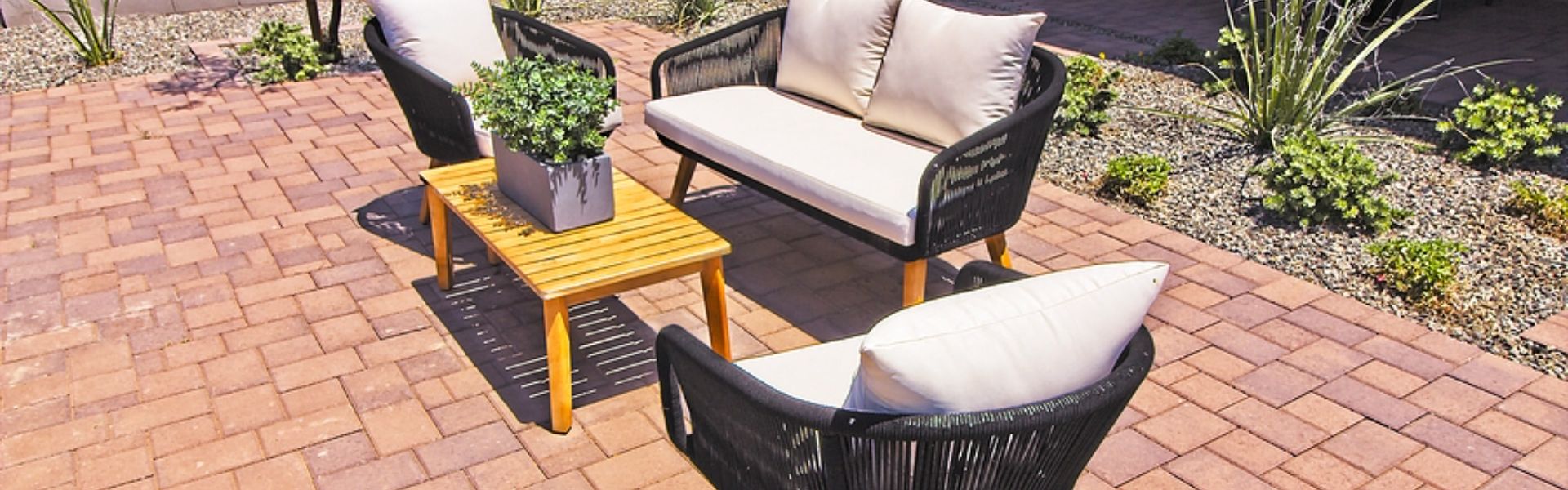
Paver walkways in our area run $15 to $40 per square foot installed, depending on the paver line, the amount of cutting, and how much base and drainage correction your ground needs. Driveways price lower per square foot than walkways because of scale, but the totals are bigger because the areas are. Here’s how real projects tend to land:
-
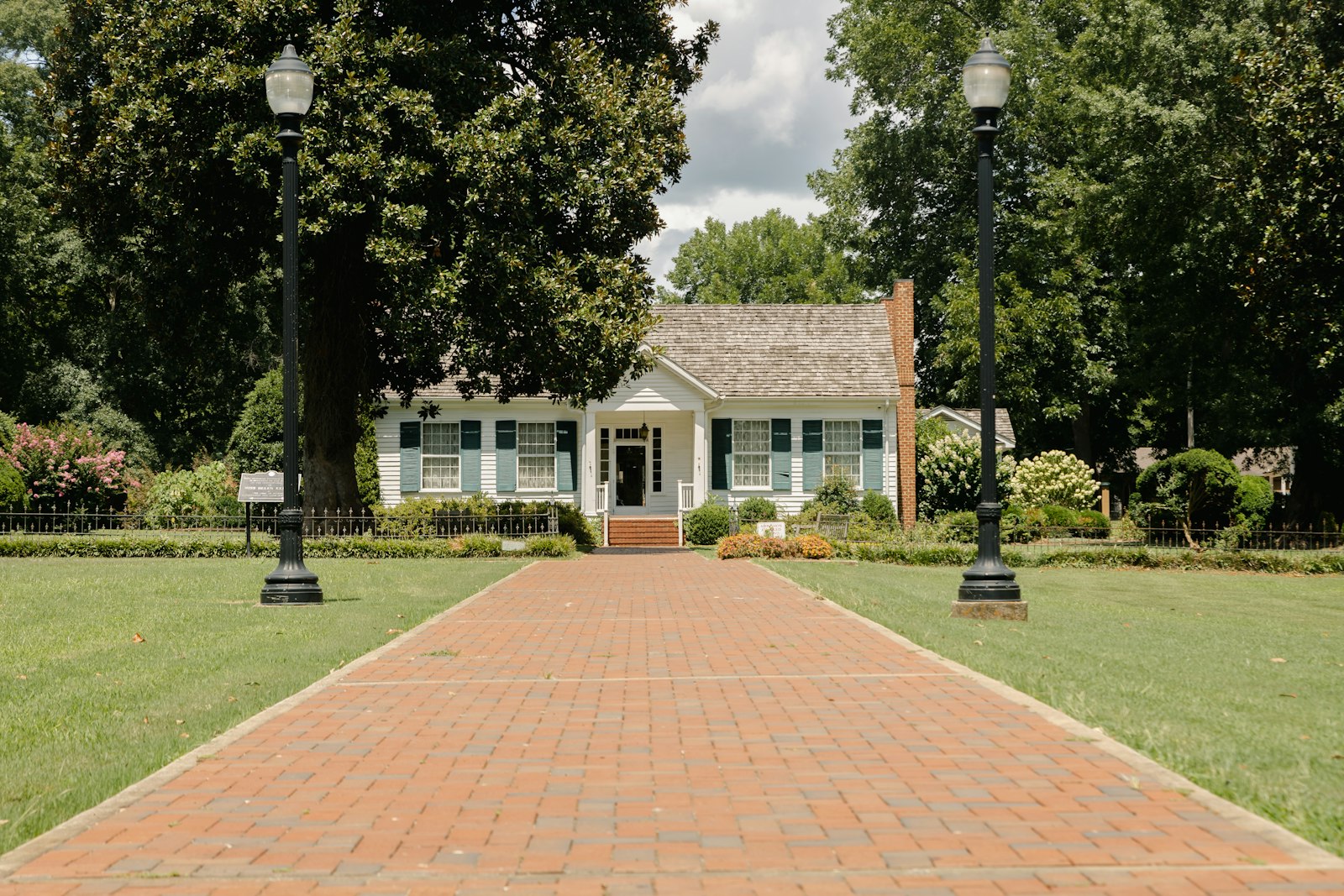
Small — standard walkway: A straight or gently curved front walk, roughly 3 to 4 feet wide and up to about 40 feet long, in a standard concrete paver with a soldier-course border. $3,000 – $8,000. This is the classic replace-the-cracked-front-walk project on ranches and colonials from Louisville to Stow, and it changes the front of the house more than anything else at this price.
-
Medium — entrance package: A wider walkway with curves, a landing at the porch, a step or two, upgraded or natural-stone-look pavers, and often low-voltage path lights built in during construction. $8,000 – $15,000. If you’re doing this tier, run the lighting conduit while the ground is open — landscape lighting added during a walkway build costs a fraction of retrofitting it later, and a lit walkway is a safety feature from October to March here, not a luxury.
-
Large — full paver driveway: A two-car paver driveway of roughly 500 to 700 square feet with a 12-inch compacted open graded base, anchored edge restraint, and a border course. $5,700 – $17,200, with most falling in the middle of that range; larger driveways, permeable systems, aprons, and integrated walkway-plus-driveway front yards go beyond it.
If you need a firm price please request a consultation so we can view your potential project, listen to your ideas, and determine the actual scope of work required. Two identical-looking front walks can price thousands apart based on what’s under them — that’s exactly why I look before I quote, and why the consultation is free.
Permeable Pavers, Slopes, and the Rest of the Front Yard
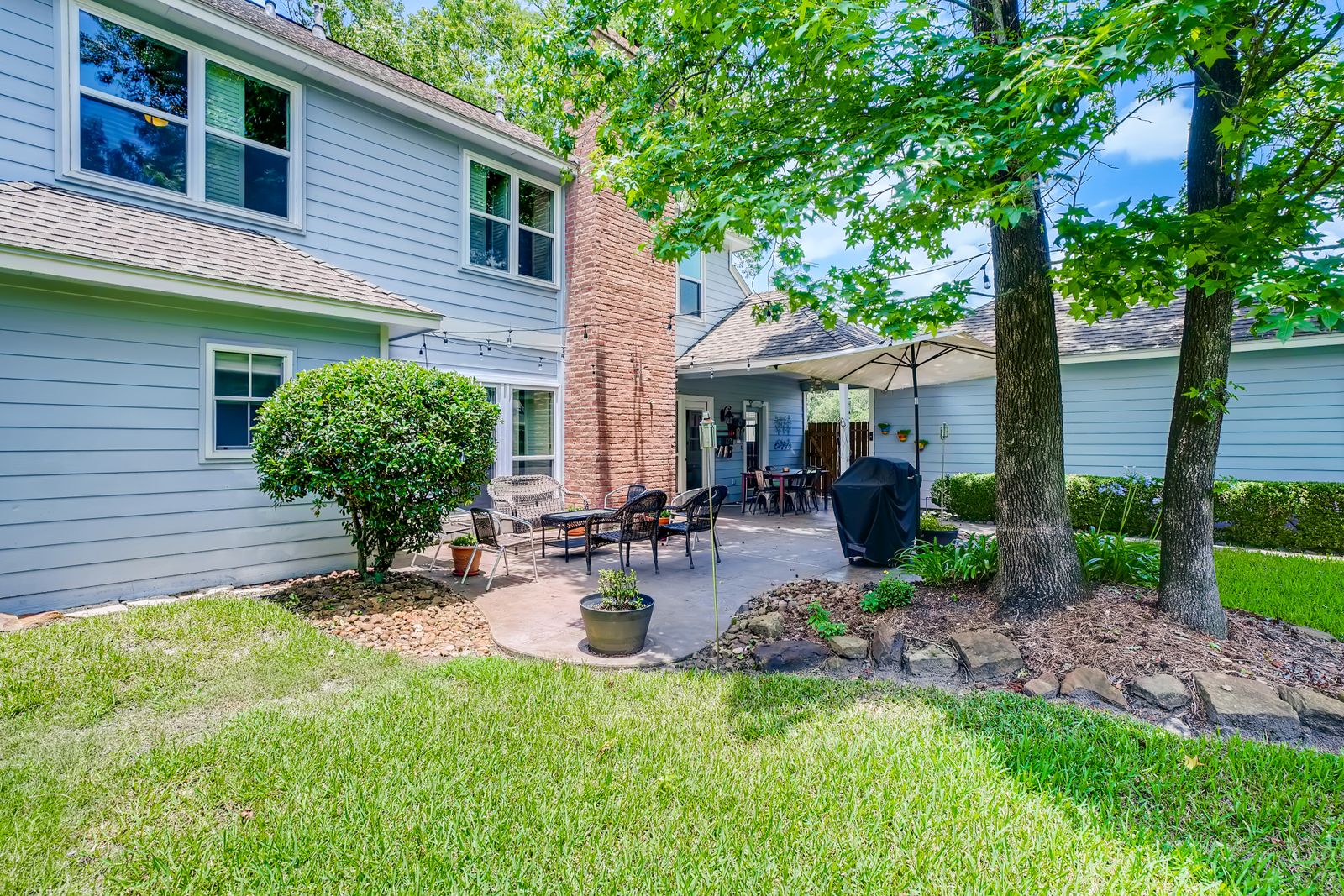
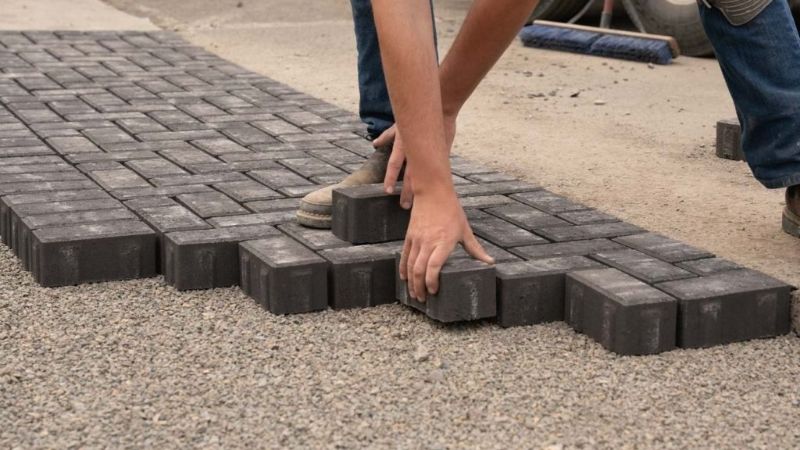
For properties where runoff is already a problem — and in clay country, that’s a lot of them — a permeable paver driveway is worth a serious look. Permeable systems use wider joints filled with clean stone over an even deeper open graded base, so rain soaks through the surface and into the ground instead of sheeting into your garage or your neighbor’s yard. On lots in Canton and Cuyahoga Falls where I’d otherwise be designing separate drainage solutions just to manage what the driveway sheds, permeable pavers solve the water problem and the surface problem in one build.
Sloped front yards — common in the older hillside streets of Akron and around Ridgewood in Canton — often need more than a walkway. A short wall alongside the walk turns an awkward grade into clean terraces and keeps the slope from washing mulch across your pavers every storm; I build those as one integrated project, the same way I handle steps, pillars, and seat walls as part of my broader hardscaping installations. If your walkway has to cross a real grade change, read up on my retaining wall construction — done together, the wall and walkway share one excavation and one base plan, and you pay for that efficiency once.
The ground genuinely differs from town to town, too. The street-tree-lined blocks off Market Avenue in North Canton and the 1920s neighborhoods near Ridgewood in Canton have mature root systems I route walkways around rather than through — cutting a big maple’s roots to save ten feet of pavers is a bad trade. Up in Akron and Fairlawn Heights, lots trend steeper and driveways longer, which moves the conversation toward permeable systems and proper aprons at the street. Local knowledge isn’t a slogan on this work; it’s the difference between a base spec that matches your soil and one that matches a template.
Frequently Asked Questions
How much does a paver walkway cost in Canton, Ohio?
Plan on $15 to $40 per square foot installed. A typical 40-foot front walkway lands between $3,000 and $8,000 depending on width, paver selection, curves and cutting, and how much base preparation your soil needs. I’ll tell you which end of the range you’re on at the free consultation — I don’t oversell and I don’t cut corners.
Are pavers or concrete better for a driveway in Ohio?
For our climate, pavers — and freeze-thaw is the reason. Concrete runs $6 to $15 per square foot against $10 to $30 for pavers, so the slab wins the day-one price. But a rigid slab over clay soil in Zone 6a will crack as the ground heaves and settles, and cracked concrete can’t be honestly repaired. Pavers flex with the ground as individual units, and a settled section can be lifted and relaid with the same material. Over the life of the driveway, the pavers usually win on cost too.
What does a 2-car paver driveway cost?
Published 2025–2026 figures put a two-car paver driveway at $5,700 to $17,200 installed, versus $2,400 to $8,600 for poured concrete. Where you land in the paver range depends on square footage, paver line, border details, and base depth — on our clay I don’t build a driveway on less than a 10-to-12-inch compacted open graded base, and I won’t quote one that way.
How long does a paver walkway or driveway last?
Built on a proper compacted open graded base with edge restraint and polymeric sand, 25 to 40 years — and the pavers themselves outlast that. The honest answer is that lifespan is set the day it’s built: the surfaces I get called to rebuild after five years all share the same autopsy report — thin base, no geotextile, no edge restraint. Fix what’s under the surface and the surface takes care of itself.
Do paver driveways hold up to snow plowing and salt?
Yes, and better than concrete. Pavers are manufactured to a higher compressive strength than a typical poured slab, so de-icing salt doesn’t pit the surface the way it spalls concrete after a few winters. Shovel, snow-blow, and plow normally — just have the plow operator keep the blade shoes set so the blade rides over the surface.
When can you install, and how long does it take?
Early spring through late fall — roughly April into November most years, whenever the ground isn’t frozen. Most walkways take 2 to 4 days on site; a full driveway typically runs about a week depending on size and excavation. Fall is an underrated slot: the project is done before winter, and freeze-thaw season becomes the first proof of the base instead of the first threat to it.
Ready To Get Started?
Transform your Canton or Akron property with a walkway or driveway that’s built to last — a surface that adds curb appeal and property value the day it’s finished and still looks right after its twentieth Northeast Ohio winter. My 4.9 Google rating and 140+ reviews didn’t happen by accident: I treat every property like it’s my own, and I build every walkway and driveway on the same base spec I’d put under my own.
Call (330) 904-4196 now for your free Canton walkway and driveway estimate.
Or fill out our online contact form and I’ll respond the same day (usually within hours).
Fili Property Maintenance · (330) 904-4196 · info@filipropmaint.com · 5928 Mann St NE, Louisville, OH 44641